Tuesday, 2 July 2024

Free Family History Mini-Class 2024 : Lesson 3


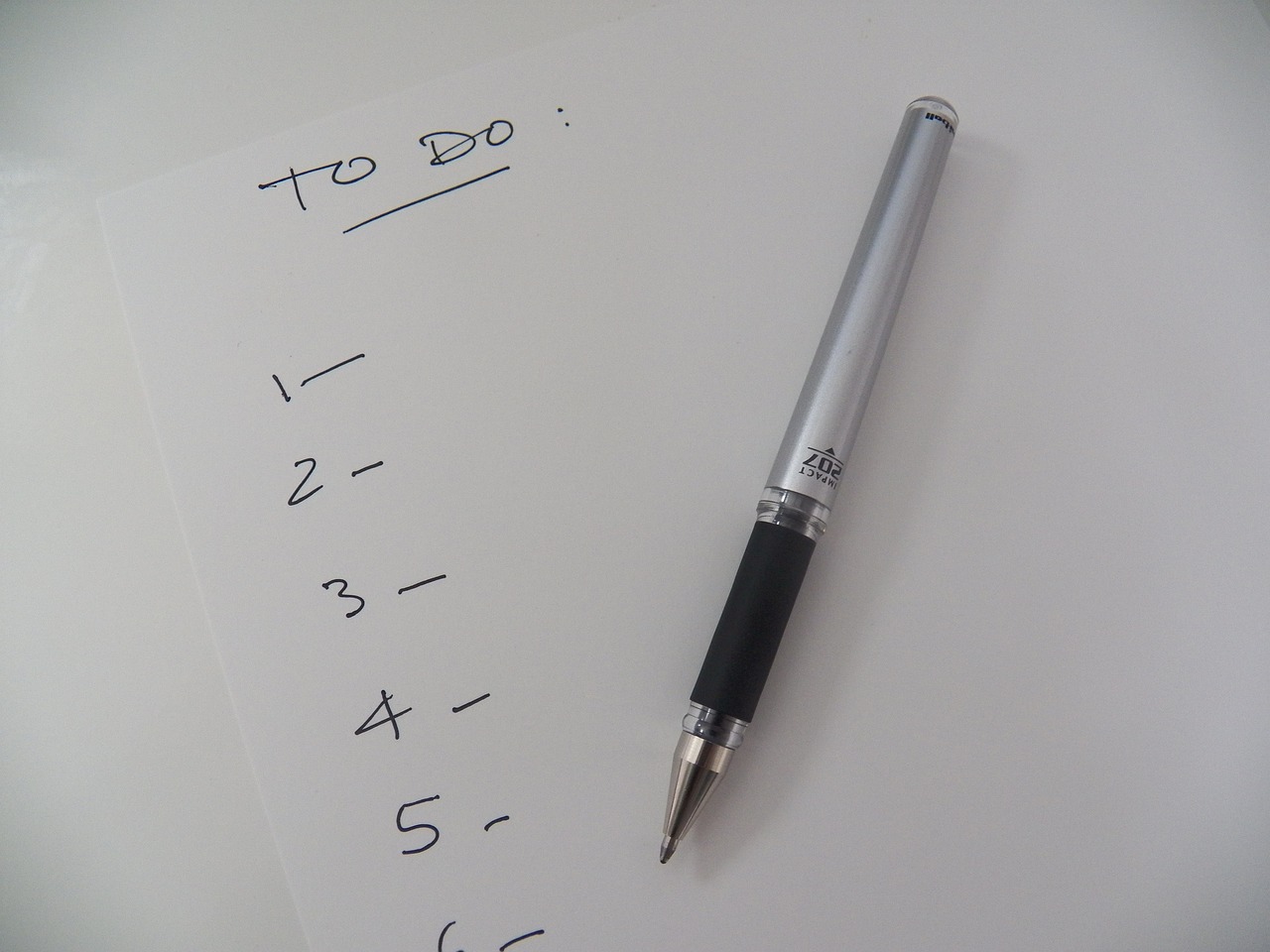
Image by inspirexpressmiami from Pixabay

Once you’ve identified the repository that holds the records you need to search, you can start to make preparations for your visit there.

Here are my suggestions for ensuring nothing gets forgotten:

      Contact the archive to give them as much advance notice as you can about your visit.  Request an appointment, where necessary, as well as to pre-order any materials that require notice to consult.  Make the most of archive staff's expertise in the records and the local area by asking them for advice regarding your search. 

      Make a list of all the records you want to see, alongside the names of the people you hope to find in them, including the reference numbers from the catalogue, to avoid wasting time by having to look them up again - for example, Helen Macpherson, Register of Paupers Admitted into the Easter Ross Union Poorhouse, CRC 8/5/1.

      Put together a file or database to take with you that contains details of all the relevant family groups that you will be researching

      Review the rules and visitor information on the repository’s website or in their literature to ensure you are properly prepared, for instance...

  • Whether you can buy food there or need to take your own, and if there is somewhere on the premises you can eat
  • If change is required for lockers or cloakroom - you won't be permitted to take your coat, bags, or food and drink items into the search area. Many archives provide clear plastic carrier bags to allow you to bring essential research kit to your seat
  • ID requirements. You may not get into the archive without specific forms of identification, so be sure to take the correct paperwork with you on the day
  • If you'll be allowed to plug your laptop in to charge in the search room

      Practice some palaeography if you’re going to be consulting records with unfamiliar handwriting styles.  I’ve listed some websites to help with that. 

      Prepare a research log book or use pre-printed log sheets to keep track of what you find, what you don’t find and, most importantly, which records you’ve searched. This is a good safeguard against re-doing the same work at a future date.   Download and use this ready-made log sheet


In the next class I'll explore some of the 
options for organising your family information.

Tuesday, 25 June 2024

Free Family History Mini-Class 2024 : Lesson 2


Image by G.C. from Pixabay

In this lesson, you can learn how to identify which record office, archive, or library you need to visit in order to move your research forward.  If you missed Lesson 1, you can catch up here.

To prepare for a visit to an archive...

☙  Do your homework by reading background material on the place and time your ancestors lived in, and find out what types of records they may have generated: for instance, consider court documents, rental rolls for tenants, electoral registers, and school records. 

☙  Use the websites of archives in your ancestors' city, county, or country to learn what kinds of records they hold, and what information those contain.  Specific subject guides are often available to download and study.

☙  Search online catalogues.  Some apply just to individual archives and are found on their websites, while other catalogues such as the UK's National Archives' cover the country as a whole - check out their guide to mining the catalogues.

☙  Be aware that as well as official government records, archives are held by charitable, religious, business, private, and academic organisations.  If you know that your ancestor worked in a specific occupation, for example shipbuilding, you should investigate what relevant archives exist.

☙  Contact the archive(s) you plan to visit if you're not sure what records will help you.  Archive staff are well-versed in the records they hold and can advise you on how to get the most out of them.

☙  Make sure that the documents you want to see will be available at the time of your planned visit.  Some archive records require advance notice to be produced for searching - you should see indicators of this in their catalogue entries.  Records undergoing conservation may also be unavailable, but staff can check this for you.

The next mini-class will focus on practical
preparations to make for your research trip.

If you've a question about this lesson,
just post it in the comments below. 

Tuesday, 18 June 2024

Free Family History Mini-Class 2024 : Lesson 1

Coloured spiral notebooks and a pencil


In the first of this series of mini-classes, here are some do’s and don’t’s to remember when writing down your family information: 

      Print rather than write – you may like to use block capitals to highlight surnames.

      Pick a format and stick with it. For example, if you prefer to put the surname first, be consistent.

      Use pencil when adding information to charts, then go over it in black ink (for permanence) once you’ve confirmed it as accurate.

      Write names out in full if known – avoid abbreviating for speed’s sake as you may not remember what the abbreviation stands for!

      ALWAYS record a married woman’s details using her maiden name, if known. Don’t be tempted to fill in a blank space with her married name, as this will only cause confusion.

      Record dates in a clear format – e.g. 8 Oct 1840 rather than 8/10/40 which can be interpreted in more than one way.

      Write places with smallest area first – parish, county, country – with any farm names or townships before the parish.

 And to help you get started, here's a family group record you can print off and use as many times as you like.

Follow the the blog by e-mail to make sure you don't miss any of the classes - just use the link in the sidebar.


Please comment below if you have any questions about this lesson!

The next mini-class will cover identifying record sources.

Tuesday, 11 June 2024

This Week's Frugality


Image by Michael Schwarzenberger from Pixabay

Some money-saving suggestions to help you with your family tree:

The Society of Genealogists is offering a free online talk, presented by Else Churchill, on English poll books. 

What are poll books? Find out in an article by Dr James Harris, a Research Associate at Newcastle University. 

Legacy, part of the company MyHeritage, offers a new version of its free family history software to help you organise your tree, store it on your device, and keep it private if you wish. There are a number of other packages available; check out reviews in family tree magazines for up-to-date details about the latest programs.

The National Library of Scotland’s digital “Scotland’s News” Collection consists of 18th, 19th, and early 20th century Scottish publications. Some of the newspapers it contains are the Scots Courant, Caledonian Mercury, Clydebank Leader, and a selection of 1926 titles from around the country.

I’ve recently been in touch with a cousin who has agreed to take a DNA test to find out more about their forebears. It can be helpful if more than one member of an extended family tests – learn more about Connecting with Your Biological Family.

At the moment, you may be able to take advantage of discounted prices on some DNA test kits. The best value as far as I can see are

Ancestry 

and

MyHeritage 

These companies market DNA test kits as Father’s Day gifts. Warning: unexpected parent details may be the result, not necessarily bringing great news to an unsuspecting dad. I think it’s really important to be aware of the potential downsides to these tests’ results. Read about the Pros and Cons of DNA in Genealogy Research


Friday, 7 June 2024

Friends and Family History

 
Image by Fuzzy Rescue from Pixabay

The last few months have been full of catching up with friends I haven’t seen for some time, and in one case meeting a former work colleague I’d only ever talked with on Zoom!

While reflecting on these joyful catchups, I realised that although it wasn’t necessarily the origin of our friendships, it was certainly a shared interest. Here are some online family history resources in honour of these friends’ different ancestries. 


Pat

Although she has a variety of ancestral origins, Pat’s maternal roots are firmly in England. A key resource that I’m sure she’s used (I certainly have when researching English relatives) is Online Parish Clerks. Run by volunteers, these focus on specific parishes or counties, listing the whereabouts of records that cover the area. Warwickshire, for instance, has an excellent parish clerk site which gives the addresses of local archives and heritage centres as well as links to online record sources and reference websites. It also explains the OPC scheme and how to get involved, if you’re interested.


Amanda

There aren't many Englishwomen as proud of their Scottish roots as Amanda! She loves the county of Perthshire where her family hale from, which bonds us a bit as my maternal ancestry is from the same area. Keekin for Kin is a downloadable, free booklet produced by Perth & Kinross Council, aimed at those curious about their family tree. It’s beautifully produced and full of helpful pointers. It mentions Perth’s Black Watch Museum, and I can heartily recommend the archive services there – I’ve previously blogged about my experience at https://scotsancestors.blogspot.com/2022/04/on-trail-of-my-military-mcintoshes.html


Julia

American by heritage but Scottish by residence, Julia has recently been thinking a bit about her ancestry. I recommended the FamilySearch website to her, but in retrospect I should also have told her about the U.S. Library of Congress website. It hosts historic newspaper collections which you can search by keyword, as well as maps dating back to at least the Civil War era. Other collections include music, photographs, and moving images. It’s an absolute treasure trove!


Sheila

A proud Londoner, Sheila is slightly related to me by marriage 😁 and is a keen genealogist, which makes her a fantastic relative to have! Layers of London lets you explore the social history of her city, and it’s totally fascinating to look at the places where people used to live. Different aspects like health, housing, crime, industry, and war are highlighted, allowing you to search for a particular place, or just browse a neighbourhood or street through time. Warning: it can take up more of your time than you expect.


Claire

Born and bred in Ireland, Claire doesn’t need me to tell her about any of the available online Irish resources – it’s what she does for a living! However, I’m a bit of a novice when it comes to these, so it’s always a schoolday when I receive Claire’s e-mail newsletter. She shares helpful techniques for tracing Irish genealogy, especially using DNA, and addresses a variety of related topics in her blog. You can catch up with that, and subscribe to her newsletter at https://cbgenealogy.ie.

Oh, and Claire – Shropshire bastardy bonds 😉 

https://www.shropshirearchives.org.uk/blog/finding-old-poor-law-records 

Friday, 20 October 2023

Book Now!

Photo by Chris Montgomery on Unsplash

Some family history events are coming up soon that may be of interest to you. All times given here are UK times, and all of the below presentations are online. Zoom has transformed the way we meet as genealogists, allowing family history society members around the world to gather virtually, and enabling individuals to connect with relatives and fellow genies they might never otherwise see!

25 October, 7.30-9.30pm
How 'Lost Cousins' can help you knock down brick walls
Have you used the resources of the website 'Lost Cousins' and its associated newsletter to make family connections? Peter Calver has operated this service since 2004 and he will be giving a talk on the importance of collaboration in researching your ancestry. This is a free, open virtual meeting run by West Surrey Family History Society.  If you're interested, sign up quickly at https://wsfhs.co.uk/pages/zoom.php as the attendance is limited to 100 people.

26 October, 1-2pm
Tools for Your Graveyard Research Kit
I can highly recommend this presentation as I'll be giving it 😁  It's being organised by Family Tree Magazine's Genealogy Gadgets Club, and it will concentrate on software, apps, and some more mundane objects that you can use to plan and carry out a successful visit to your ancestors' final resting place(s). If you're not already signed up for the magazine or its online services, you can register for a free 7-day trial which will allow you to attend the talk, at https://www.family-tree.co.uk/how-to-guides/apps-and-software-for-gravestone-research/

11 November, 2-4pm 
Using the Map Collection of National Library of Scotland
Don't be fooled by the title; the NLS map collection covers the whole of the UK and beyond. This is a free event, run by the Aberdeen & North East Scotland Family History Society's Edinburgh group, and all you need to do is register with them by emailing edinburgh@anesfhs.org.uk. If you're already a member of the society, log on to their website https://www.anesfhs.org.uk/ using your membership details and book there.  A link will be sent out to all who've registered prior to the meeting.  

15 November, 3-4pm
Introduction to Family History
Coincidentally, this is another free webinar explaining the resources of the NLS, but this time it's being hosted by the library itself.  It's an introduction to the physical and digital sources held by the NLS that can be used in researching family trees. The presentation will be followed by a question and answer session. You can get your ticket through Eventbrite at https://tinyurl.com/dz2jpmjx, and it's advisable to book now as these events are always extremely popular, and tickets go fast!

If you find you can't attend an event you're really interested in, check with the organisation running it as they may offer similar presentations in the future. For really focused topics relevant to your research, check out the family history society for your ancestors' area to see if they have meetings you can attend, virtually or in person.

Thursday, 3 August 2023

Coming soon...


Hands holding an open notebook on a table, with a pencil ready to write. Surrounding are a box of yellow paperclips, a bulldog clip, sticky note cube, and laptop keyboard

Some upcoming free events which could help boost your family history skills as well as appreciation for the built heritage in your area of interest!


9th September 2023

Scottish Indexes Online Conference 

The programme includes

The People of Cross House by Kate Keter

   Crimes of an Heinous Nature by Margaret Fox 

People Lie! How to unravel the truth when you are tracing your family history by Emma Maxwell

Tracing Your Belfast Ancestors by Chris Paton

‘Like All These Country Folks Very Stupid’: Glasgow Highlanders in the Poor Law Applications by Alison Spring

Scottish Tax Records for Genealogy and Local History by Robert Urquhart

You can watch it on Facebook or register on the website to join via Zoom.


10th-11th September 2023

Family History Research Workshop and

Exhibition with The Wiener Holocaust Library

Scottish Jewish Heritage Centre, Glasgow

Featuring a pop-up exhibition, Fate Unknown: The Search for the Missing after the Holocaust, as well as a family history workshop about the archive, with the chance to get advice on carrying out your own research. Places are limited, so register now and make sure you don’t miss out. 


26th August – 3rd September

East Lothian Archaeology & Heritage Fortnight

A great variety of talks, walks, and exhibitions around the area, including topics like fishing, military history, architecture, and Gaelic waulking songs!


September 2023

Doors Open Days 

The annual festival of architecture, heritage and history takes place in various locations around Scotland throughout the month of September. Sign up for the newsletter to get all the latest details.


Information about some local festivals:


Renfrewshire  


Glasgow 


Scottish Borders  


If you spot a building you absolutely have to see, and it requires pre-booking to view, make sure you book early as places go like hot cakes on these occasions.